
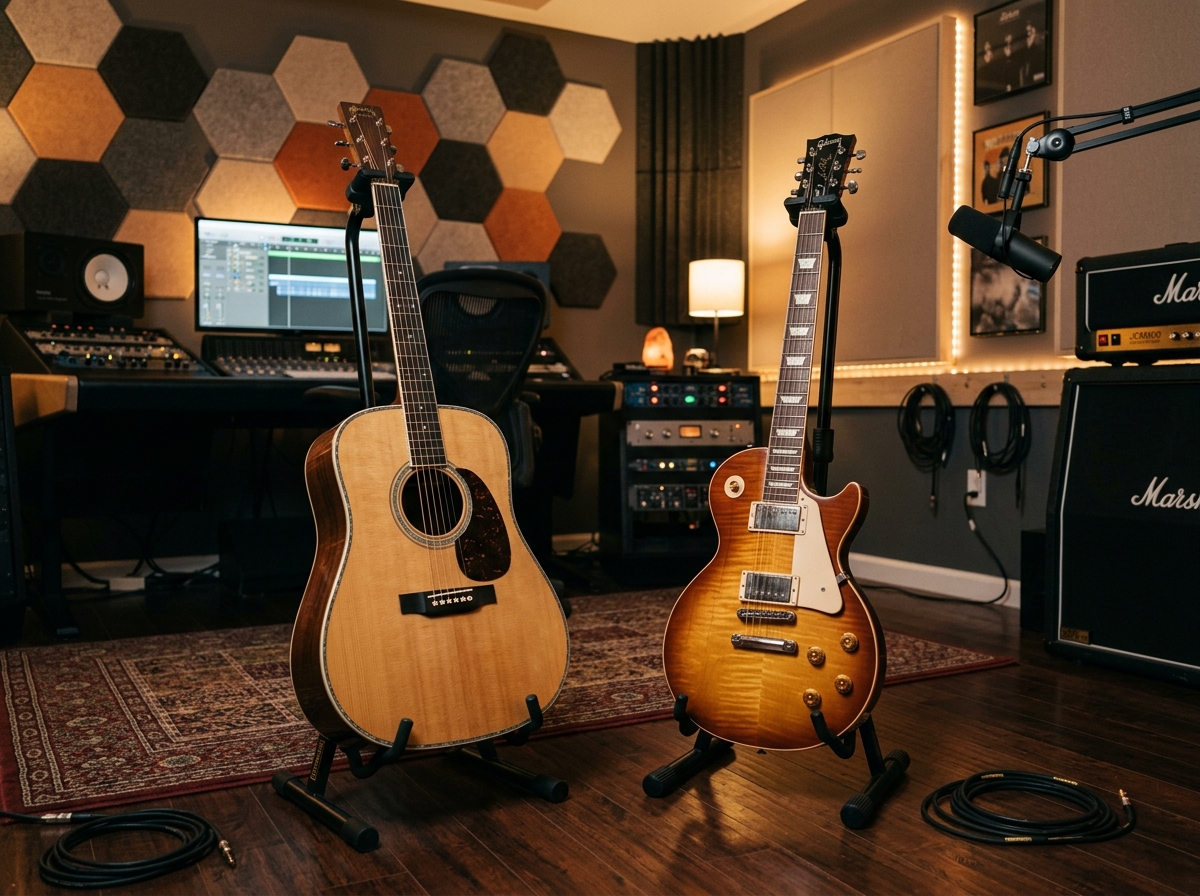
Introduction: There's No Universally "Better" Starter Guitar
The best beginner guitar depends on the music you want to play and how much friction you're willing to tolerate early on. Here's an honest comparison from years of teaching first-time students.
1. Acoustic Guitar: Pros & Cons for Beginners
Pros: no amp needed, portable, ideal for Bollywood/folk strumming, cheaper starter cost overall. Cons: thicker strings and higher typical action mean sore fingertips in the first few weeks, and barre chords take longer to master.
2. Electric Guitar: Pros & Cons for Beginners
Pros: thinner strings and lower action make fretting notes noticeably easier on young or sensitive fingers; volume can be controlled or muted with headphones for late-night practice. Cons: requires an amp and cable, adding to the starter cost, and can be less motivating if your goal is casual campfire-style strumming.
3. Our Recommendation by Age & Goal
| Student Profile | Recommended | Why |
|---|---|---|
| Kids under 10 | Electric (small body) or 3/4 acoustic | Lower action, less finger strain |
| Teen/adult, loves pop/folk | Acoustic | No extra gear, easy to carry anywhere |
| Teen/adult, loves rock/metal | Electric | Matches target tone and technique |
| Budget-conscious beginner | Acoustic | Lower total starter cost |
Conclusion
Pick the guitar that matches the music that excites you — motivation matters more than spec sheets in the first year. Explore specific models in our Guitars Buying Guide.